

Current Success Stories

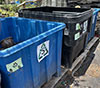 B.B. Barns Garden Center
has teamed up with MDT Bromley to recycle plastic plant pots and trays. Waste Reduction Partners made the initial connection for the two businesses. The partnership has taken off and B.B. Barns is now able to divert these hard-to-recycle plastics from the landfill.
 Kill Devil Hills Theatre Secures Major Energy Grant with WRP Assistance
Kill Devil Hills, NC — The RC Theater in Kill Devil Hills has been awarded a grant covering 40% of its energy efficiency upgrade costs through the U.S. Department of Agriculture’s Rural Energy for America Program (REAP). The award follows an energy analysis conducted by Waste Reduction Partners (WRP), which demonstrated the theater’s potential for significant savings.
The theater sought upgrades to its lighting, HVAC, and projection equipment. WRP’s analysis revealed that the improvements could reduce energy use by more than 152,000 kilowatt-hours annually, saving the business over $14,000. These findings formed the foundation of RC Theater’s successful REAP application.
With a total project cost of $555,674, the 40% reimbursement from REAP—capitalized through the Inflation Reduction Act—marks a significant win for the community landmark.
“We’re thrilled with the award and deeply appreciative of WRP’s assistance,” said RC Theater management. “Their expertise made all the difference in securing this opportunity.”
The REAP program supports rural businesses and farms across the country in adopting energy efficiency and renewable energy projects, helping them cut costs while strengthening local economies.
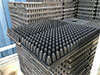
Tri-Hishtil Plants a Stronger Future
Tri-Hishtil, a five-acre plant grafting facility in Mills River, has always been rooted in sustainability.With nearly 170 employees, the company is committed to reducing waste and already recycles cardboard and plastic films locally in Asheville. But one stubborn challenge remained: their high-impact polystyrene seed trays, a critical material that was harder to recycle.
Looking for solutions, Tri-Hishtil reached out to Waste Reduction Partners (WRP). WRP connected them with Verity Recycling, a recycler specializing in rigid agricultural plastics. That connection quickly bore fruit—Verity now collects three truckloads of seed trays annually, diverting 24 tons of trays from the landfill.
The environmental payoff is clear, and the financial benefits are significant as well. As Yulia McBride, Operations Manager at Tri-Hishtil, explains:
“Tri-Hishtil is proud of the fact that we recycle, and we appreciate WRP's help in finding markets for our recyclable materials. Last year we saved about $70,000 on trash pickup and this year that number will go up 20-25% because of the price increase for disposal and the increase in our production. It's not all about saving money, although that is a big plus.”
By partnering with WRP and Verity Recycling, Tri-Hishtil not only strengthened its environmental practices but also boosted its bottom line—proving that sustainability and business success can grow side by side.
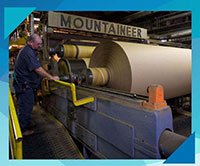
Jackson Paper, Sylva
WRP’s Greg Goodman helped Jackson Paper connect with Biltmore Iron and Metal (BIMCO) to recycle their rag rope. Jackson Paper now receives a small revenue from a by-product that they once paid to dispose. The arrangement diverts up to 2,076 tons per year from the landfill and saves approximately $80,000 in annual disposal costs.
 Arcadia Beverage, Arden
WRP connected Arcadia Beverage with a plastics recycling opportunity which helped their facility divert over 432,000 pounds per year and save $17,800 of annual disposal costs.
Dirtcraft Organics, Madison County, Grant Acquisition Assistance 
WRP has been providing technical assistance to Dirtcraft Organics on their new composting facility in Madison County, and LOSRC provided a letter of support for Dirtcraft Organics' successful funding application for the 2025 Food Waste Reduction Grant through NC Department of Environmental Quality. Their grant, one of thirteen awarded, is helping their new organics-recycling facility open in 2025. Dirtcraft received $60,000 for their project. This facility will be able to convert eighteen tons per week of organic waste, which would otherwise be wasted in our local landfill, into a productive soil amendment.
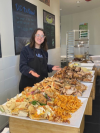
UNCA CONDUCTS “WASTE SORT BUFFET"
WRP and DEAC partnered with UNC Asheville to support their “waste sort buffet,” an educational effort aimed at raising awareness about food waste in their dining halls. A waste buffet displays the uneaten food in categories to show the volume of edible food that was discarded visually. UNCA’s cafeteria had a total of 237 pounds of food waste during one lunch period! Nearly eighty pounds of edible portions resulted from 530 meal ticket swipes. With 15 percent of this purchased food being wasted, event organizers hope to encourage behavioral changes to reduce food waste.
Pic caption: Raechel Peterson, Environmental Specialist, UNC-Asheville, exhibits a “buffet” of cafeteria food waste collected from one dining hall session. WRP staff, Marc Rudow and Jan Hardin supported the awareness event.